Famous People
 MARILYN - SOMETHING HAD TO GIVE
There has been no one like her - before or since.
by John McManamy
MARILYN - SOMETHING HAD TO GIVE There has been no one like her - before or since.
by John McManamy
ON APRIL 10, 1962, Marilyn Monroe arrived on the set of the bedroom farce, "Something’s Got To Give," for costume and screen tests. Producer Henry Weinstein described her as "at her best," but later that same evening he found her unconscious from an apparent sleeping pill overdose. Weinstein pleaded with the executives at Fox to delay shooting, but with the studio teetering on financial collapse as a result of the white elephant, "Cleopatra," they badly needed their most bankable star to bail them out.
Marilyn most likely was dealing with bipolar. And, of course, she was Marilyn. An AMC documentary from the early 2000s, "Marilyn Monroe - The Final Days," recounts what happened next:
Shooting was delayed a week while Marilyn went to New York to be with her mentors, Lee and Paula Strasberg. She returned energized, but with a bad cold that rendered her cinematically hors de combat. The studio rejected their own doctor's recommendation that production be postponed a month. One week later, Marilyn reported to work, only to collapse on the set the next day.
A short time earlier, US Attorney General Robert F Kennedy had entered Marilyn’s life. Marilyn confided in Weinstein of her impending first date and sought his advice on what kind of questions she should be asking. A week later, when Weinstein enquired how it was going, Marilyn cheerfully replied, "I don’t need any more questions."
Then there was Robert’s older brother, President John F Kennedy. Marilyn skipped a day of shooting to pant her famous rendition of "Happy Birthday, Mr President" in a gown that anticipated Jennifer Lopez by 40 years.
SIGN UP FOR MY FREE EMAIL NEWSLETTER
Meanwhile, the set at Fox resembled an armed camp, with director George Cukor at odds with both Marilyn and producer Weinstein, frustrated actors, an unhappy crew, and Fox executives on the warpath over Marilyn’s absences.
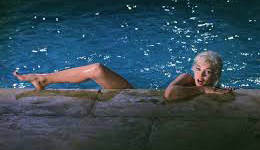
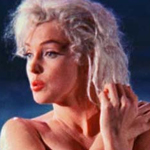
But the Marilyn captured on film completely belies the sound and fury behind the scenes. The screen fairly lights up with her presence, and a nude pool scene, painstakingly reconstructed from footage in the vault, stands as Exhibit A for why there has been no one like her before or since.
But soon after the pool scene, she disappeared for the weekend, then called in sick. When she returned to the set, she seemed to lack focus. Speculation has it that RFK may have broken off the affair.
By now, filming was 11 days behind schedule. Marilyn had worked for but 13 of 30 production days. When she called in sick for the 17th time, Fox fired her. Marilyn was humiliated and began believing reports that she was all washed up, but then she rebounded to wage a spirited public relations campaign which resulted in the studio doing a complete about-face, signing her to a $1,000,000 two-picture contract. With shooting on "Something’s Got To Give" set to resume with a new director, Marilyn was back with a vengeance.
Then, days later, on the morning of August 5, Marilyn’s housekeeper noticed lights on in her room. She opened the door to discover why. Marilyn was dead from an overdose of sleeping pills. She was 36.
Marilyn’s bipolar is the most likely explanation for the incredible and unpredictable ups and downs that governed her final days and resulted in her tragic ending. Testimony from her personal physician and the fact that her mother was institutionalized lend credence to this view. Clearly another factor was the sheer magnitude of her personality (with elements of narcissism and borderline personality disorder entering into it).
A vulnerable person physically and mentally not ready for the demands of shooting another film, she had been placed in the impossible position of carrying an entire studio’s fortunes on her shoulders. Add to that her fears that maybe she could no longer live up to her larger than life Marilyn Monroe persona, and add to that the deflation of her grandiose bubble that she could be a future President’s wife. Who knows what else was going through her mind? Something had to give. Something did.
Reviewed July 15, 2016
NEW!
Follow me on the road. Check out my New Heart, New Start blog.




MORE ARTICLES ON McMAN


FEATURED VIDEOS