Mood
 BIPOLAR DISORDER FAQ
 Your official bipolar disorder cheat sheet..
by John McManamy
BIPOLAR DISORDER FAQby John McManamy
What is bipolar disorder?
Officially, bipolar disorder is an episodic mood disorder characterized by extreme shifts in mood, from depressive lows to manic highs. Unofficially, I would describe it as a cycling illness. It's as if our brains are in perpetual motion. Thus, we are constantly anticipating the next phase in the cycle - or cycles, if you like.
Cycles?
Yes, it's very clear we are talking about more than one, from seasonal changes to circadian rhythms. On top of mood, our thoughts and volitions are also shifting, along with energy levels, and not necessarily in sync. But for the sake of simplicity let's refer to the whole dynamic as our mood cycle.
So why is it important to think in terms of our mood cycle?
Instead of seeing depression and mania and various in-between states as isolated episodes, we need to be constantly mindful of how they relate to and interact with each other, as well as any other outside forces that may throw things out of whack.
For instance?
Is the hypomania (mania lite) we are in a prelude to full-blown mania or are we about to crash into depression? Or perhaps we're in for smooth sailing. If we are feeling stresed or missing out on sleep, how does that affect our cycle - what is the likely consequence and can we head it off at the pass?
What are the different types of bipolar disorder?
The American Psychiatric Association's Diagnostic and Statistical Manual Fourth Edition (DSM-IV) has divided bipolar disorder into two types, Bipolar I and Bipolar II, both which are severe and debilitating. In addition, the DSM-IV lists as separate disorders "Cyclothymia," which can be described as a "bipolar lite," and schizoaffective disorder, which borders on schizophrenia.
What are the symptoms of bipolar I?
Bipolar I requires only the presence of a single manic episode (or mania "mixed" with depression), though just about all people with bipolar I experience major depressive episodes, as well.
What is Mania?
The DSM-IV describes an episode of mania as "a distinct period of abnormally and persistently elevated, expansive, or irritable mood, lasting at least one week" (or requiring hospitalization). The DSM-5 would add to this, "abnormally and persistently increased activity or energy."
In addition, the DSM requires at least three of the following seven symptoms (four if merely irritable): 1) Inflated self-esteem or grandiosity, 2) decreased need for sleep, 3) More talkative than usual, 4) Flight of ideas, racing thoughts 5) Distractibility, 6) Increase in goal-setting activity or psychomotor agitation 7) Excessive involvement in pleasurable activities (such as buying sprees, sexual indiscretions, or foolish business investments).
The DSM goes on to say that the symptoms must be severe enough to interfere with work or social relations or necessitate hospitalization to prevent harm to one's self or others.
Those manic highs must be a lot of fun.
Not really. People on manic highs are out of control, and people out of control quickly get into trouble. Ruined careers, personal bankruptcy, and wrecked relationships are par for the course, and hospitalization, incarceration, and homelessness are far too common. Moreover the intoxicating high of mania (euphoria) can turn on itself into a raging agitation (dysphoria) that creates a state of internal hell. Also, most people in a manic episode experience at least one psychotic symptom (such as delusional thoughts or hallucinations). Finally, there are "mixed" states where one is literally both manic and depressed.
What are the symptoms of bipolar II?
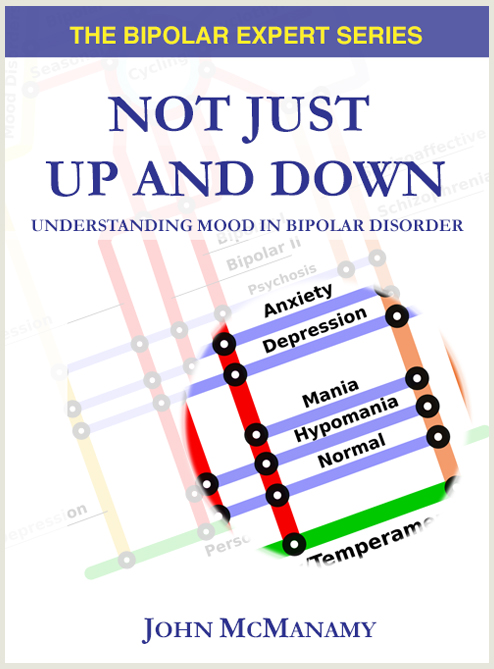
The DSM mandates the presence or history of at least one major bipolar depression episode. Because major depression is such a common feature of bipolar II, it is a mistake to regard bipolar II as somehow milder than bipolar I. The DSM also mandates the presence or history of at least one hypomanic episode. Hypomania can be described as "mild" mania, with the same symptoms, but where the symptoms are not severe enough to interfere with work or social functioning, though they are observable by others.




Those hypomanic highs must be fun.
Yes, definitely, but we are learning that many people who are hypomanic can be dysphoric, your classic road rage cases. Otherwise, one can define hypomania as "life of the party" behavior with "salesperson of the month" productivity. Nothing lasts forever, however. Things may settle down with no bad effects, but in many cases hypomnia ia followed by a crash into depression or an escalation into mania. People with bipolar I often experience hypomania as a prelude to mania.
What are the symptoms of cyclothymia?
One can think of cyclothymia as "bipolar lite," characterized by mood swings from hypomania to mild depression. But these constant shifts in mood can be tremendously unsettling and disorienting, and ultimately they result in considerable suffering.
What about "soft" bipolar?
Clinicians and patients are both waking up to the fact that many people with so-called unipolar depression may in fact be suffering from a "soft" form of bipolar. "Soft" is hardly the word, though, when in the throes of a "hard" depression. These are essentially devastating depressions broken up by occasional periods of "up."
So what does "soft" bipolar look like?
By loosening the diagnostic criteria for bipolar - say by reducing the time minimum for hypomania from four days to two - the population of bipolars would jump from one or two percent to as high as five or six percent. Many of these people never fully experience the highs of bipolar, but their depressions cycle in a pattern similar to bipolar, or they may be experiencing mania and hypomania features within their depressions. Why this is important is that standard depression treatments may not work for these people. Whether you call them bipolar or not, they may need bipolar meds and bipolar recovery strategies.
I've heard that soft bipolar and bipolar II is just the flavor of the month.
Soft bipolar, along with bipolar II, is part of the concept of the mood spectrum, which has represented leading expert opinion since the early twentieth century, so we are not talking flavor of the month. The people who ridicule bipolar II as a fad diagnosis tend to believe the drug industry is trying to make money medicating us for an illness we don't have. The irony is that many of us are already being medicated for an illness we don't have - namely depression.
But aren't all depressions alike?
Not when they are bipolar depressions. Antidepressants may worsen bipolar depression in many ways, resulting in agitation, speeded up cycling, and switches into mania and hypomania. Various failures on antidepressants point to a bipolar diagnosis, but we shouldn't have to wait years for doctors to make the right call.
SIGN UP FOR MY FREE EMAIL NEWSLETTER
Can you talk a bit about the depression side of the equation?
By all means. Mania gets all the attention, but bipolar patients are actually depressed three times more than they are manic or hypomanic (estimates are much higher for those with bipolar II), and the depressed phase of the illness results in more hospitalizations than the manic side. Moreover, depression accounts for nearly all of the bipolar suicides, one in five among those untreated. This amounts to double decimation, as decimation literally means one in ten.
Does bipolar depression look different than unipolar depression?
At the risk of gross over-simplication, it appears many people with bipolar have features of atypical depression, which is more like a vegetative depression than an agitated depression, though there may be elements of animation. Some individuals with atypical or vegetative depressions may in fact have unipolar depression. Nevertheless, a vegetative or atypical state should put clinicians on notice to investigate for bipolar. Unfortunately, this rarely happens, and misdiagnosis is the rule rather than the exception.
So, when in doubt ...?
The first principle of medicine is do no harm. Owing to the high probablity of harmful effects of antidepressants on individuals with bipolar, clinicians need to be far more cautious about making a unipolar diagnosis. I would submit that bipolar, not unipolar, needs to be the default diagnosis. This is a contentious issue, but the bottom line is that clinicians have been far too reckless in diagnosing unipolar depression and in prescribing antidepresssants. This has resulted in tremendous suffering for those with bipolar, whether bipolar I, bipolar II, "soft" bipolar, or cyclothymia.
What are the symptoms of schizoaffective disorder?
The DSM lists schizoaffective disorder under "Schizophrenia and Other Psychotic Disorders," but a strong body of opinion suggests that even though bipolar and schizophrenia are distinct disorders, they form part of a spectrum with overlapping features. Schizoaffective disorder occupies the middle ground between bipolar and schizophrenia, characterized by mania and depression as well as psychosis (delusions, incoherent speech, hallucinations) or other features of schizophrenia.
Do we treat schizoaffective different than bipolar?
The situation varies from individual to individual. From our perspective, it is helpful to look at schizoaffective as a form of bipolar with heavy-duty psychosis. This involves treating both mood swings AND psychosis. Psychosis may also occurs in bipolar mania or depression. In schizoaffective, the psychosis occurs indepently from mood swings.


This sounds very confusing.
It is. When it comes to schizoaffective, there is a lot more confusion among the experts than consensus. But the bottom line is that "bipolar with heavy-duty psychosis" involves extra challenges in treatment and recovery. Nevertheless, recovery is possible.
I have my up moods and down moods, my bad days and good. Does this mean I have bipolar disorder?
Not necessarily. Mood swings are normal, as are the many features of mood, including elation, grief, and anger. But when your behavior begins to affect your work and social relations or is noticeable by others, you may have a problem.
Okay, you better expain psychosis to me.
Psychosis refers to hallucinations, both visual and aural. Individuals with psychosis may see or hear things that are not real. If the individual knows that the visions or voices are not real, the hallucinations may simply represent an inconvient intrusion. The trouble starts when the hallucinations become dominating or when the victim starts believing the visions or voices are real.
Psychosis also refers to deulsional thinking and beliefs, such as believing you are God or that the CIA is out to get you.
Tell me about rapid-cycling.
The DSM's idea of rapid is at least four episodes over one year. Rapid-cyclers, however, tend to change form one mood to the other and back again at far shorter intervals, sometimes several times a day and even several times an hour and in rare cases in the space of minutes. Because those who rapid-cycle represent a moving target, and because of the instability of their condition, this group of people are notoriously difficult to treat, with high rates of failure. Women are more likely than men to be rapid-cyclers.
How serious a problem is bipolar disorder?
The Stanley Bipolar Foundation Network, which admittedly gets the sickest patients in its clinics, in the early 2000's released this data: 85.1 percent had been hospitalized in the past, on average three times. The rate of suicide attempts was 50.3 percent. A third were currently married, another third single, and the rest were separated, divorced, or widowed. Despite the fact that approximately 90 percent had high school diplomas and a third had completed college, almost 65 percent were unemployed and 40 percent were on welfare or disability. According to Mark Bauer MD of Brown University, speaking at a conference in 2001, thirty to 50 percent of bipolar patients remain chronically ill.
That's pretty depressing news.
Yes it is. The good news is we can dramatically improve our chances by being smart in managing our illness.
Can you talk about the demographics of bipolar disorder?
Yes. Approximately two to three percent of the population lives with bipolar disorder, but some experts push the figure up to as high as six percent by adopting softer criteria for the illness. Equal numbers of men and women suffer from the illness. People tend to have their first episode in their late teens or early twenties, though they may have experienced some of the symptoms much earlier.
Can kids get bipolar disorder?
Yes, and sad to say it appears to be far more frequent than in the past. Moreover, studies are finding that bipolar kids are sicker than bipolar adults. A bipolar kid can rage out of control for hours on end and literally hold his family hostage. Because the illness on the surface appears similar to ADHD or conduct disorder, kids are usually misdiagnosed - often by psychiatrists who refuse to believe that kids can get bipolar - and are treated with the wrong drugs that make their condition worse.
So how do you tell a bipolar kid from one who has ADHD or conduct disorder?
Only by careful observation and long conversations with the parents. As opposed to those with ADHD or conduct disorder, for example, bipolar kids tend to be risk-seeking and grandiose, with nonstop flight of thoughts.
How controversial is the topic of bipolar disorder in kids?
Very, especially with groups opposed to all forms of psychiatry getting in on the act. Much of the controversy centers on whether we should be giving kids meds that are intended for adults.
What causes bipolar disorder?
We don't really know, though we do know that variations in genes predispose people to the illness, and that stress can trigger an episode. Various irregularities in neurotransmitter systems such as dopamine and glutamate are part of this dynamic. Inside the neuron, there is a lot of talk about disruptions in signal transduction pathways that are responsible for optimizing cellular function. Tied into this is dysregulation in ion channels that penetrate the cell membrane and in effect connect neurotransmitter activity to cell pathway activity. Whether inside or outside the cell or in between, we can think of bipolar as a type of "nervous system breakdown disease" where our brains are badly equipped to handle what life throws at us.
We also know that the defining feature of bipolar is cycling, with research pointing to malfunctions in our brain's "master clock," involving the regulation of circadian and other biological rhythms.
There is also some evidence that vitamin or mineral deficiencies may sabotage neurotransmitter production and other brain functions.
Since the brain is highly complex, the exact cause-and-effect is likely to differ from individual.
I think I may have bipolar disorder. What is my first stop?
If you are in a life-threatening situation, or if you may be a danger to others, your first stop is the emergency room of your local hospital. Otherwise, you should book an appointment with a psychiatrist.
What should I expect from a psychiatric examination?
You can expect questions ranging from how you are feeling to how you are faring at work and at home to any family history of mental illness, if any. All the while, the psychiatrist will be probing for unusual behavior, such as spending sprees or talking too fast. Unfortunately, it takes bipolar I patients six years and bipolar II patients more than 11 years between first contact with the medical system and a correct diagnoses. This puts a considerable onus on you to reveal as much as you can to your psychiatrist. Basically, your psychiatrist is only as good as what you tell him or her.
So what should I be telling my psychiatrist?
Focus on all those times you didn't feel your normal self or too much like your normal self. You might want to go back over those times in your life you would rather forget - such as embarrassing yourself in public or attacking your spouse or walking off your job or getting arrested - or where you were unusually productive - working 20-hour days, cleaning the house in the middle of the night, writing a term paper in three hours - and try to remember what you were feeling during the time and the times that led up to these events. If you felt you were smarter than the rest of the world, describe it. If you were in a raging white heat, fill in the details. If you were in an incapacitating blue funk, describe how hard it was to get out of bed. If possible, try to write down everything you can recall in order to organize your thoughts.
To paraphrase Jack Nicholson, I can't handle the truth.
Admitting that there may be something wrong with you is one of the most difficult tasks there is. Add to that fear and ignorance and stigma, and you begin to appreciate why so few people seek help or get a correct diagnosis.
Bad psychiatry is indeed dangerous, as is the indiscriminate prescription of psychiatric meds.
I have been diagnosed with bipolar disorder. Who should I let know?
As few people as possible, at first. It is important to know that this illness carries a much greater stigma than depression, and you run a high risk of alienating friends and associates simply by breathing the word. Legally, in the US, you should not have to reveal your illness to your employer or prospective employer, but companies may require employees to have an in-house physical where one must disclose one's medications. If there is any consolation, some of history's most talented - as well as most notorious - individuals have had bipolar, including Ludwig von Beethoven, Michelangelo, Isaac Newton, Vincent Van Gogh, Ernest Hemingway, Virginia Woolf, and Hitler.
Having said all that, it's essential to have support. So if you feel you can trust certain friends and are willing to take the risk of losing them, then by all means disclose your illness. Some of them may have suspected you had bipolar disorder, all along.
Hopefully, enough of us will go public, which is ultimately the only way of ending the stigma and gaining acceptance for this illness. But don't feel you have be the one to change the world.
I just read a book that says mental illness is a myth and that diagnostic labels are meaningless. Is this true?
No way mental illness is a myth, but our diagnostic labels are at best merely rough guides. Our behavior is regulated through the brain, so there is clearly a biological element to behavior. But the chemical imbalance explanation for mental illness has been thoroughly discredited.
The book you read probably uses this logic: Because chemical imbalance is a myth, therefore there is no biological component to behavior, therefore there is no mental illness.
A better way to look at it is this: A new understanding into the brain is replacing our old and simplistic ways of looking at mental illness. We have hardly reached a definitive understanding, and in all probability we never will. New research tends to raise more questions than answers.
This is why it is important to look beyond the labels to what is really going on inside our heads. The articles on this site encourage you to make your own self-discovery.
See also: Bipolar Treatment FAQ, Recovery FAQ
Reviewed June 23, 2016
NEW!
Follow me on the road. Check out my New Heart, New Start blog.