Populations
 CHILD BIPOLAR - PART III
Kids face similar challenges as adults, but with far less insight and ability to cope.
by John McManamy
CHILD BIPOLAR - PART III
Kids face similar challenges as adults, but with far less insight and ability to cope.
by John McManamy
WITH the acceptance of the child bipolar diagnosis came the fear that bipolar in kids would become the new normal. Nevertheless, media accounts from the early days were overwhelmingly sympathetic.
That changed instantly with the tragic death of four-year-old Rebecca Riley in 2007 on an apparent overdose of an antipsychotic and a heart med. Not long after, Joseph Biederman, the psychiatrist most responsible for bringing child bipolar to the attention of his peers, failed to disclose his financial interests with Johnson&Johnson, makers of Risperdal. Suddenly even JAMA (in an Oct 28, 2010 editorial) was dropping hints of evil Pharma conspiracies.
"Anything But Bipolar"
As if to stem the tide, something of an "anything but bipolar" movement gained momentum in psychiatric circles. The DSM-5 obliged in 2013 with the new diagnosis of "disruptive mood dysreguation disorder," (its first iteration was" temper dysregulation disorder with dysthymia.") Its background "Justification" paper did some child bipolar-bashing of its own, citing the rise in the diagnosis in apparent proof of psychiatry gone wild. The paper also accused researchers and clinicians of playing fast and loose with the diagnosis ("broaden the phenotype," was how they phrased it).
In actuality, the only major player advocating a broader phenotype had been Ellen Leibenluft of the NIMH. Aside from some justifiable quibbling about rapid-cycling, Beiderman, Papolos, Geller and others had stayed well inside DSM-IV adult criteria. They had all suggested various types of behavior to guide clinicians in spotting the diagnosis, but the "child" in the bipolar they had in mind was clearly an early-onset form of adult bipolar.
Indeed a committee of the International Society for Bipolar Disorders, looking into the matter in the late 2000s, could not see what all the apparent fuss was about. Bipolar was bipolar at any age, they said in effect. You hardly need to be of voting age to have bipolar, or, for that matter any medical condition.
But Dr Leibenluft was looking at a slightly different population of kids. In 2003, along with a "narrow" phenotype based on adult criteria, she proposed two intermediate and one broad phenotype to embrace kids without classic mania. These would be the type of irritable and submanic kids that Dr Geller had excluded from her cohort of bipolar kids. Her work at the NIMH with "severe mood dysregulation" would form the basis of the proposed mood dysregulation diagnosis, a new "mood disorder" specific to kids.
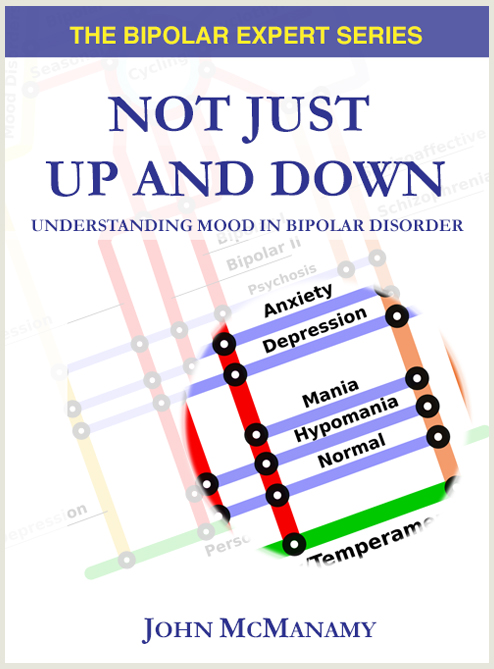




The defining feature of the new diagnosis is sustained temper tantrums interspersed with irritable moods, with age of onset from 6 to 10.
Dr Leibenluft's rationale is valid, but the justification paper reeks of a new diagnosis cooked up in secret by a committee (okay, make that two committees), which is exactly what occurred. The "evidence" cited in support amounted to creative reinterpretation of old studies. Especially worrisome was the paper's dogmatic insistence that disruptive mood disorder kids don't grow up to be bipolar adults. The reality is even kids who appear perfectly normal may grow up to be bipolar adults.
So now it appears that doctors fearful of labeling a kid with bipolar can opt for the "anything but bipolar" diagnosis.
Bipolar Meds
It stands to reason we would not be having this kind of debate if bipolar meds were to bipolar what ADHD meds are to ADHD, but that is far from the case. Talk to any adult with bipolar and you will hear horror stories of doctors having no regard for their well-being prescribing antipsychotics and mood stabilizers in doses measured in kilotons. As I report in the Treatment section of this site, when it comes to bipolar, doctors and patients are not on the same page namely:
SIGN UP FOR MY FREE EMAIL NEWSLETTER
The patient wants his or her life back. The doctor wants to keep him or her out of the hospital. The patient wants to get well and stay well. The doctor is content with keeping the patient stable, but not well. The patient wants to return to functionality. The doctor is interested in symptom-reduction, even at the expense of functionality.
On and on it goes - doctors who don't care, don't listen, who only know bipolar from a frighteningly narrow perspective, who pay more attention to the pharm reps who walk in the door than to the patients they have sworn to do no harm, whose confidence in the meds they over-prescribe can only be described as delusional - you can see what we're thinking ...
And you want to put kids through this?
But talk to any adult with bipolar and you will also hear horror stories of having to endure one of the worst illnesses on the planet, one that takes over your brain and turns your world into a hell not even Dante could imagine. It is bad enough we were robbed of our adulthoods. But to rob a kid of his childhood? By all means, let's find out what's going on. Let's get these kids on the right diagnosis. And even if the treatment is a crapshoot, in the name of humanity, sign up your kid for the crapshoot.
Some hard cold facts:
The best study we have of antipsychotics on a population of kids (led by Cristoph Correll of Zucker Hillside Hospital in 2009) reveals a mean weight gain over 12 weeks for Zyprexa of 19 (not a typo) pounds. Even for supposedly weight-friendly Abilify the weight gain was 10 pounds. More than half gained more than seven percent of their total body weight.
Just as worrying are the sedating side effects. Meanwhile, mood stabilizers such as Depakote and lithium come with their own set of major weight gain and sedation issues.
If only these meds worked for bipolar the way ADHD meds worked for ADHD. Nevertheless, all you need to hear is one parent who says the simple magic words, "My kid is getting invited to birthday parties." Little things like that, huge implications.

Invariably, parents of bipolar kids will tell you that bipolar was the very last diagnosis considered - after ADHD, after depression, after one of the conduct disorders. What frightens many observers - including, obviously, the people who came up with the TDD diagnosis - is parents brandishing Papolos' The Bipolar Child in the doctor's face and walking out with a prescription for Risperdal for their two-year-old.
Indeed, psychiatry's most astute critic, David Healy of Cardiff University, himself a psychiatrist, cited precisely such an example.
Make no mistake: The appalling lack of judgment for a good many of those who practice medicine, psychiatry included, cannot be underestimated.
At a 2002 conference at Johns Hopkins, Paramijit Joshi MD, Chair of Psychiatry and Behavioral Sciences at the National Children's Medical Center in Washington DC told the gathering she gets kids aged four and five on four or five medications. "I'm spending more time taking kids off medications than putting them on, as I don't know what I'm treating," she related.
But let's assume you are dealing with a psychiatrist who cares about your child. We know that more than 90 percent of younger kids who experience manic symptoms also experience ADHD symptoms. We know an ADHD screening is unlikely to pick up mania in your child. But we do know a mania rating scale will pick up mania in your child. Your psychiatrist has done everything right, but still - in the case of your child - the diagnostic call amounts to a coin toss.
Obviously, the ADHD diagnosis with ADHD meds offers by far the most hope. Common sense says to go that route first. But wait - what if your kid really has bipolar. Will the ADHD meds make your kid worse? Perhaps permanently?
We already know that antidepressants are likely to worsen the course of bipolar, or turn kids who had never experienced mania into kids who experience mania. A number of doctors express similar fears about ADHD meds.
So - should you actually consider trying bipolar first, even if that means putting your kid on an antipsychotic or a mood stabilizer? Tough question, no easy answer.
In his 2010 book Anatomy of an Epidemic, author Robert Whitaker observed that the sudden spike in kids with the bipolar diagnosis coincides with the introduction of SSRI antidepressants. In other words, antidepressants and possibly ADHD meds may be responsible for the child bipolar epidemic. There is no proof for this, but neither do we have any other credible explanations for the sudden outbreak of bipolar in kids. Only theories.
Child Bipolar - The Non-Meds Stuff
The Bipolar Child lays particular emphasis on non-meds interventions, including working with your child's school in setting up special accommodations. For instance, if a child or adolescent does not function well in the morning, it may be possible to arrange for academic classes later in the day.
As opposed to psychiatrists, educators tend to be on the same page. They want your kid able to function, socially and academically. There are very encouraging stories of enlightened educators willing to bend over backwards to help your kid, but the onus of establishing a working partnership falls on you.
Likewise, as with adult bipolar, establishing strict routines is paramount. Bipolar kids have major issues involving going to bed and getting up. What little sleep they manage to get tends to be filled with terrifying dreams and other complications. Indeed, it often pays to think of bipolar as a sleep disorder with mood side effects. If you can help your kid manage her sleep, managing the rest of the illness becomes a lot easier. The Papolos' are very aware of this and offer a lot of good advice.
Likewise, for anyone with bipolar - adult or child - the world represents an extremely insecure place. When walking into a room, we never know which "me" will turn up (often, it's our evil twin) or whether those inside are friendlies or hostiles, even if we know them intimately. For kids - who by definition lack insight and coping skills - the world can be far more terrifying. Thus - considerable emphasis on making your child feel safe - at home, play, school, everywhere.
Dr Joshi brought up the scenario of a kid coming home from residential treatment, where he or she may have behaved perfectly, but then melts down when exposed to normal family stressors. Hence the need for ongoing education, including various family therapies.
Diet, Toxins
That 20-ounce Coke your kid may drink at school contains 15 teaspoons of sugar. And he or she may glug down another 15 on the way home. Kids' cereals are basically crunchy sugar, their school lunchrooms resemble Seven-Elevens with no adult supervision, and fast foods loaded in sugars and saturated fats have become the world staple. We eat out a lot more, where we have no control over the ingredients that go into our meals. Even a restaurant salad can be loaded with fat and sugar.
Obesity and diabetes may be the obvious outcomes, but these kind of diets are also specially designed to turn even normal kids into ones who climb walls and ceilings.
It may also be a good idea to test your child for toxic substances and sensitivities to certain types of food. Dust, mold, various chemicals such as those in fertilizers, and pollens can affect the central nervous system and the brain. Doris Rapp MD, author of Our Toxic World: A Wake Up Call, advises asking:
Was it a pollen season? Had you just moved or started a new job or school? Did you purchase a new mattress, carpet, furnace, furniture? Did you paint or pesticide your home? Did you remodel or repair something in your home? Was there an upset in your health (an infection or operation), life, home, family?
Conclusion
Finding the right diagnosis for your kid, with smart meds treatment and appropriate psychosocial and educational interventions, as well as lifestyle changes, is bound to be a process of heartbreak and frustration.
There is no way of sugar-coating this: Bipolar is one of the worst illnesses on the planet, and kids have a far worse time managing it than adults.
By the same token, never abandon the hope that your child can eventually lead an enriching, creative, and productive life.
An article in the South Florida Sun-Sentinel from the early 2000s describes one family's journey through hell, but finally - after finding a psychiatrist who made a correct diagnosis and treated their kid accordingly, mother Tina was able to say of her 13-year-old son: "I don't know this kid. He's a different kid. He's fun. I enjoy being around him ... Steven was getting A's where he used to get F's ... I never bonded with Steven. Now that he's stable, I'm learning to love him. I'm catching up on nine years."
Kids like Steven have been out of the closet with their diagnosis since day one. Unlike previous generations with the illness, they are growing up refusing to be invisible and demanding to be heard. Please take pride in your kids - they will truly change the world.
See also:
Child Bipolar Part I* Child Bipolar Part II * Are We Overmedicating Our Kids?
This article replaces earlier articles, Jan 24, 2011, reviewed Dec 4, 2016
NEW!
Follow me on the road. Check out my New Heart, New Start blog.