

Obama and the Normal Paradox
 |
In times of crisis, normal is not the answer, says one expert.
|
Understanding normal. Soon after election day 2008, I posted a blog piece on HealthCentral entitled, "The Presidency: Temperament is the Real Issue." As you will recall, at the time of the election, the world was in economic free-fall. But the real concern was not the economy so much as which candidate possessed the best temperament to handle the crisis.
Virtually every babbling head at the time weighed in on the topic. Joe Klein, writing of Obama in Time magazine, observed: "His preternatural calm has proved reassuring ... "
By contrast, during the campaign, voters were unnerved at the spectacle of an impulsive and mistake-prone John McCain barely able to contain his rage. As I noted in my blog piece:
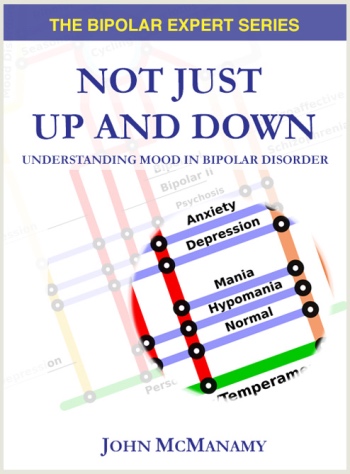
My New Book!

Purchase now.
Obama was seen as "unflappable," in short, the type of person you would want first on the scene if you happened to be pinned under a car about to explode.
Okay, I take it all back.
A year after Obama took office, Jacob Weisberg, in a piece on Slate subtitled "How Obama's cool, detached temperament is hurting him and his party," wrote:
His relationship with the world is primarily rational and analytical rather than intuitive or emotional. ... His tendency to focus on substance can make him seem remote and technocratic.
But Weisberg limited his analysis to Obama's apparent failure to connect emotionally to the masses rather than his emotional incapacity to manage crisis. In short, when the center cannot hold, even Obama's worst critics would agree that the last thing we want is a crazy person in the control room.
No! says Nassir Ghaemi most unambiguously. Dr Ghaemi, a leading expert on mood disorders at Tufts, is the author of the eye-opening 2011 "A First-Rate Madness: Uncovering the Links Between Leadership and Mental Illness." According to Dr Ghaemi:
"No drama" Obama might be considered the epitome of mental health. We like our presidents moderate and middle-of-the-road - psychologically even more than politically. But psychological moderation is not what marks our great presidents. Can we applaud passion, embrace anxiety, accept irrationality, appreciate risk-taking, even prefer depression? When we have such presidents - the charismatic emotional ones, like Bill Clinton - we might have to accept some vices as the price of their psychological talents.
Dr Ghaemi is by no means the first in making a case for abnormal tendencies as leadership virtues. Joshua Shenk's 2005 "Lincoln's Melancholy," for instance, brilliantly documents how Lincoln's personal failures and his lifelong history of depression paradoxically molded him to take charge in the face of the greatest-ever challenge to the US.
But Dr Ghaemi tells us a little bit manic is also a good thing, exemplified by FDR and JFK. The base temperaments (hyperthymic) of these two Presidents may have been poles apart from the likes of Lincoln and the rest, but what all these great leaders shared in common were lives characterized by struggle and personal setback. Thus - born different, shaped different. And in crisis situations, different - not normal - is what we want.
Crazy, in effect, is normal to us. You know it, I know it.
Thus, of all things, when crunch time came - while the world around them was going bananas - the crazy ones - Lincoln, Churchill, JFK and the others - turned out to be the sane, level-headed ones.
They stayed calm, they listened, they identified with others. Moreover, they grasped what needed to be done, took charge, articulated their vision, rallied their troops. And they acted. If something went wrong, they owned the disaster, learned from their mistakes, made the necessary course corrections, and rose to the occasion - again and again and again.
Here's where it really gets interesting. "Normal" individuals, says Dr Ghaemi, are singularly unsuited for crisis. Their brains were built for handling predictable situations in quieter times. When the unexpected occurs, they are typically at a loss. What seems to be happening, according to Dr Ghaemi, is their world view is totally out of sync with actual events. They don't know what to do. They make fatal mistakes that they compound by rationalizing and justifying. Thus, in the case of Nixon with Watergate:
Faced with the greatest political crisis of his life, he handled it the way [a normal person] would handle it: he lied, and he dug in, and he fought.
In a similar fashion, George W Bush went weird on us. But here is the punch line: According to Dr Ghaemi, both Nixon and Bush were perfectly normal. Call Nixon delusional and paranoid. Call Bush stupid and irrational. But you're wrong on all counts, according to Ghaemi. Until 1973, Nixon was the most successful person on earth. And all through his life, everyone wanted to be friends with George W.
But when faced with crisis, both Nixon and Bush essentially lost their bearings. Can you see the stigma issue here? Dr Ghaemi certainly can. We're afraid to attribute success to crazy, but we are all too quick to assign it to failure.
But Nixon had to have been crazy, you say. No, says Dr Ghaemi. What looks like crazy were normal individuals reacting to crisis in a normal way. A crazy person (or at least the right kind of crazy person), in effect, would have reacted in a way that came across as normal.
Confused? Throw away your conventional wisdom, says Dr Ghaemi. Normal isn't always an asset. And there are clearly times when normal is neither the rational nor the best course.
In Sept, 2011, NY Time columnist David Brooks wrote:
The prognosis for the next few years is bad with a chance of worse. And the economic conditions are not even the scary part. The scary part is the political class's inability to think about the economy in a realistic way.
Surely, the situation (as of Oct 4, 2011 when I posted this) calls for someone with an even temperament in the Oval Office, right? You tell me. In 2008, we elected such an individual. Are you happy?
Next: Normal - Highly Over-Rated
Based on a series of blogs Aug andSept 20011, reworked into two articles Oct 4, 2011
 |
More articles on behavior. |

